


Table of Contents
- Why High-Quality Clothing Deserves a Different Care Routine
- How to Read Clothing Care Labels Before You Wash
- How to Wash Delicate Clothes Without Damaging Them
- How to Remove Stains from Clothing Without Ruining the Fabric
- Drying and Ironing: Protecting Shape, Color, and Drape
- How to Store Clothes Properly Through Every Season
- A Fabric-by-Fabric Care Reference for Wool, Silk, Cashmere, and Blends
- Repair, Mending, and When to Call a Professional
- Frequently Asked Questions
Last Updated: October 18, 2026
Why High-Quality Clothing Deserves a Different Care Routine
High-quality clothing is built from better fabric, stronger stitching, and a cut that holds its shape, and it rewards a slower care routine.
The gap comes down to fiber.
Care labels exist for this reason. The US Federal Trade Commission's guidance on care labeling explains that labels give the instructions needed to keep a garment looking right.
Here is the short version of everything below:
- Wash less often, and only when a garment actually needs it
- Use cold water and a gentle cycle
- Air-dry whenever you can
Get those five habits right and most garments will outlast their fast-fashion equivalents by years.
How to Read Clothing Care Labels Before You Wash
A care label is a small map of what a garment can survive, and reading one takes two minutes.
Start with the words, then the symbols. Most Canadian and US labels spell out the basics; when only symbols appear, work through them from washing to drying to ironing.
Decoding the Five Symbols That Matter Most
- Washtub with a number: the number is the maximum water temperature in Celsius. A washtub with a hand inside means hand wash only.
- Triangle: bleaching. An empty triangle allows bleach. A crossed triangle means no bleach at all.
- Square with a circle: tumble drying. One dot means low heat, two means medium. A crossed symbol means air-dry only.
If a label says dry clean only and you plan to wash at home anyway, test on a hidden seam first. Some fabrics, particularly structured wool and lined pieces, will not recover from a home wash.
How to Wash Delicate Clothes Without Damaging Them
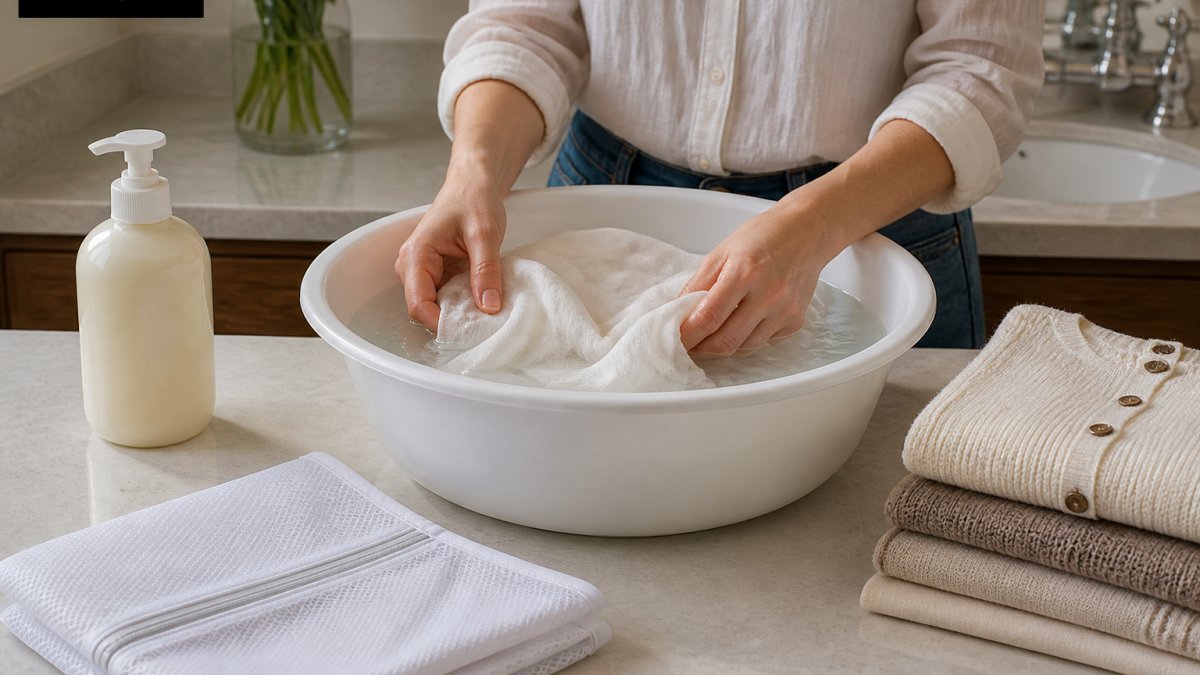
Washing delicate clothes safely means cold water, a gentle cycle, and a mesh bag for anything fragile. That combination protects fiber, color, and shape at the same time.
Cold Water, Gentle Cycle, and When to Hand-Wash
Cold water is the single best setting for high-quality clothing. It slows dye loss, reduces shrinkage, and stresses fibers less.
Use the gentle or delicate cycle for anything labeled that way. Slower agitation and a lower spin speed matter for knits and anything with stretch.
Hand-wash when the label says so, or when a piece has structure to protect. Our Organic Cotton Slub Knit Top calls for hand wash cold, no bleach, and lay flat to dry.
A few habits that make a real difference:
- Turn garments inside out before washing
- Close zippers and fasten buttons
- Wash like colors together
How to Remove Stains from Clothing Without Ruining the Fabric
Treat a stain within minutes and most will lift cleanly. Rubbing hard or reaching for hot water pushes pigment deeper into the fiber.
Blot, do not scrub. Work from the outside of the stain inward so you do not spread it. Then follow the treatment that matches the stain type:
- Oil and grease: dab with a small amount of dish soap, wait five minutes, wash cold
- Coffee and tea: rinse with cold water, then apply a mild detergent
- Red wine: blot immediately, cover with salt, then wash cold
For set or stubborn stains, take the garment to a professional cleaner and tell them the cause.
Drying and Ironing: Protecting Shape, Color, and Drape
Air-drying is the gentlest way to finish a wash and the best defense against shrinkage. The wrong drying method can stretch a knit, set a crease in linen, or leave a shine mark on wool that never comes out.
Match the Drying Method to the Garment
Hang or lay garments according to weight and structure: the heavier and more structured the piece, the more support it needs.
Skinny Leg Pant Jupiter Cotton Stretch 31" →
- Heavy knits, cashmere, and wool sweaters: dry flat on a clean towel, reshaping to the original measurements while damp. Hanging them wet pulls the shoulders out of shape and adds length you cannot undo.
- Lightweight shirts, tees, and pants: hang on a line or a padded hanger. Give the garment a sharp shake first to release wrinkles before it dries.
- Structured jackets and lined pieces: dry on a broad wooden or padded hanger so the shoulders keep their shape. Never dry these flat, or the lining and shell dry at different rates and pucker.
Keep clothes out of direct sunlight while drying, strong sun fades color, especially on dark denim and saturated prints. A shaded line or indoor rack solves this; if drying indoors in a small space, run a fan to prevent mildew.
Ironing and Steaming by Fabric
Iron on the lowest setting that does the job, and use a pressing cloth on delicate fabrics. The goal is to relax the fiber, not press it flat.
- Linen: iron damp or with steam on medium-high. Linen creases heavily if dried completely, so press it while it still holds a little moisture, or mist it first.
- Cotton: medium heat, steam optional. Iron inside out on dark colors to avoid shine.
- Wool: low heat with a pressing cloth, or steam only. Never press wool directly with a hot iron, it flattens the loft and leaves a permanent shine.
A few finishing habits that protect drape and color:
- Iron inside out whenever the garment has a sheen or a dark dye
- Let a steamed garment hang a few minutes before wearing so the fibers set
- Skip starch on high-quality fabrics, it stiffens the drape you paid for
Our Linen Jersey Knit V-Neck T-Shirt is a good example of why drying method matters: lay it flat to dry and press it damp on low, and the linen-viscose blend keeps the drape it was cut for.
How to Store Clothes Properly Through Every Season
Proper storage protects the investment. Most damage to good clothing happens off the body, moths, mildew, stretched shoulders, and set-in odors do more harm in the closet than a year of careful washing.
The Three Rules of Storage
Clean, dry, and breathable. Every storage decision follows from those three.
- Clean before storing. Small marks attract pests and set over time, and moths are drawn to protein and sweat. Wash or dry-clean everything before off-season storage.
- Dry completely. Even slightly damp wool or cotton grows mildew in a closed bag or bin. Mildew smells, stains, and weakens fiber, and it spreads to everything stored beside it.
- Let it breathe. Breathable cotton bags and garment covers protect from dust and light without trapping moisture. Plastic bags and vacuum-sealed bins trap humidity and crease structured pieces.
Hangers, Folding, and Shape
- Use wide, padded hangers for jackets, coats, and structured tops so the shoulders do not develop points.
- Fold knits rather than hanging them. A hanging sweater stretches under its own weight, and the shoulders never recover.
- Fold jeans along the crease, not over a wire hanger, which leaves a permanent line.
Protecting Against Pests, Moisture, and Odor
- Moths: cedar blocks, lavender sachets, and clean storage deter them. Moths target wool, cashmere, silk, and blends, check these pieces at each seasonal rotation for small holes along seams and underarms.
- Moisture: keep storage cool and dry, away from exterior walls and damp basements. A small moisture absorber in a storage bin helps in humid climates.
- Odor: air garments overnight between wears rather than spraying them. For musty stored pieces, a short airing in shade plus a gentle wash usually solves it.
Seasonal Rotation
As fall settles in, rotate lighter summer pieces out and bring wool, knits, and layers forward. Check each piece as you go for small repairs, a loose button or worn seam is far cheaper to fix now than to replace later.
- Wash and fully dry summer linens and cottons before they go into off-season storage
- Store them folded in breathable cotton bags with a cedar block
- Bring wool and cashmere forward, air them for a day, and check for moth damage before wearing
Our Organic Cotton Slub Knit Top is a good example of a piece that rewards proper seasonal storage: fold it rather than hang it, store it clean and dry.
A Fabric-by-Fabric Care Reference for Wool, Silk, Cashmere, and Blends
Different fibers need different handling. Use this table when a label is unclear or missing.
| Fabric | Wash Method | Drying | Ironing | Watch Out For |
|---|---|---|---|---|
| Wool | Hand wash cold or dry clean | Lay flat | Low, with cloth | Heat and agitation cause felting |
| Silk | Hand wash cold, mild soap | Lay flat, away from sun | Low, inside out | Water spots and strong sun |
| Cashmere | Hand wash cold, no wringing | Lay flat on towel | Steam only | Stretching when wet |
| Linen | Machine wash cold, gentle | Hang or lay flat | Medium, damp | Heavy creasing if dried fully |
| Cotton | Machine wash cold | Tumble low or hang | Medium | Shrinkage in heat |
| Synthetics | Machine wash cold, gentle | Hang | Low | Fabric softener and high heat |
| Blends | Follow the most delicate fiber | Air-dry | Lowest setting | Guessing instead of checking |
Our Linen Jersey Knit V-Neck T-Shirt follows the linen rules above: hand wash cold, no bleach, lay flat to dry, iron at low.
Repair, Mending, and When to Call a Professional
Small repairs extend a garment's life more than any washing habit. A loose button, dropped hem, or small tear takes minutes to fix.
Learn three basic repairs:
- Reattach a button with a needle and matching thread, using a small shank of thread under the button so it sits properly.
- Fix a hem with a simple running stitch, pressing the fold flat first.
- Close a seam by turning the garment inside out and stitching along the original line.
Call a professional for structured tailoring, lined garments, leather, and anything with beading or embroidery. A tailor can also adjust fit, often the difference between a piece you wear and one that sits in the closet.
Frequently Asked Questions
How often should you wash high-quality clothing?
Wash high-quality clothing less often than you might think. Items worn next to the skin, like T-shirts and tanks, need washing after one or two wears. Pants, blazers, and knitwear can often go three to five wears before a wash if you air them out between uses. Spot-clean small marks instead of running a full wash cycle. This approach protects fabric fibers, preserves color, and cuts down on water and energy use over the life of the garment.
Should you wash quality clothes in cold water?
Yes, cold water is the safer default for most high-quality clothing. Hot water can cause shrinkage, fading, and fiber damage, especially in cotton, linen, and wool blends. Cold water cleans everyday soil effectively while protecting color retention and fabric condition. Reserve warm water for heavily soiled items like workout wear, and always check the care label first. When in doubt, cold water and a gentle cycle are the low-risk choice for garments you want to keep for years.
How should you dry delicate or premium clothing?
Air-dry delicate and premium clothing whenever possible. Lay knits flat on a towel to preserve their shape, and hang woven pieces on a clothesline or drying rack. Keep garments out of direct sunlight, which can fade color over time. Avoid the machine dryer for wool, silk, cashmere, and anything with stretch, since heat and tumbling cause shrinkage and stretching. If a label permits tumble drying, use the lowest heat setting and remove items while slightly damp.
How do you store clothes to prevent damage?
Store clothes clean and fully dry in a cool, dark, and dry space. Use padded hangers for structured pieces like blazers, and fold knits flat to avoid stretching. Keep garments out of direct sunlight and away from damp walls. For seasonal storage, use breathable cotton garment bags rather than sealed plastic, which traps moisture. Add cedar blocks to deter pests, and avoid overcrowding your closet so air can circulate and fabrics can breathe between wears.
Good clothing asks for a little attention, and the payoff is a wardrobe that fits well and lasts. If you want pieces worth caring for, Dream Pants carries timeless styles from Canadian brands, with free shipping on orders over $95 in Canada and the US, 30-day postage paid returns, and a lowest price guarantee. Our customers tell us the consistent sizing keeps them coming back. Build a wardrobe you will keep for years.


Laissez un commentaire